

In 2026, a business website is no longer just a digital presence. It has become the core of how companies build trust, attract customers, and compete in an increasingly crowded digital landscape. The expectations of users have evolved, and search engines have become far more sophisticated in how they evaluate websites.
A modern website is not only about aesthetics. It is about performance, scalability, structure, and adaptability. Businesses that recognize this are not simply creating websites—they are building long-term growth systems that support their entire digital strategy.
Your website is no longer a static asset. It functions as the engine behind your visibility, credibility, and conversions. Companies that invest in modern web development position themselves ahead of competitors still relying on outdated platforms or rigid templates.
The Role of Websites Has Fundamentally Changed
There was a time when having a website was enough. A few pages with basic information could establish an online presence. That era has passed.
Today, your website is often the first interaction a potential customer has with your business. Within seconds, users evaluate your brand based on speed, clarity, and overall experience. If anything feels slow, confusing, or outdated, they leave—and most do not return.
First impressions are no longer driven by visuals alone. They are driven by performance.
Modern websites must guide users effortlessly, communicate value instantly, and eliminate friction at every step. Businesses are increasingly turning to professional development teams because aligning design, performance, and SEO requires a unified approach.
A website today is expected to do more than exist. It must actively support growth, engagement, and conversion.
Why Modern Websites Perform Better in Search Engines
Search engines have evolved far beyond keyword matching. Today, they analyze how users interact with your website after they arrive. Engagement, behavior, and usability now play a critical role in rankings.
A modern website performs better because it is built with these factors in mind from the beginning:
- Fast loading speeds
- Clear and intuitive navigation
- Structured and readable content
- Seamless mobile experience
These are not optional enhancements. They are essential ranking signals.
Google does not simply rank content—it evaluates the overall experience users have on your website.
When a website is optimized for usability and performance, users stay longer, interact more, and trust the content. This leads to stronger engagement signals, which naturally improve visibility in search results.
Modern development ensures that SEO is not an afterthought. It is built directly into the foundation of the website.
The Hidden Cost of Outdated Websites
Many businesses underestimate how much an outdated website can hold them back. Even if it appears functional, underlying issues often create friction that impacts both users and search engines.
Over time, these problems compound and reduce overall effectiveness.
Outdated websites commonly struggle with:
- Slow loading speeds
- Poor mobile responsiveness
- Rigid and inflexible structures
- Difficult content management
These limitations make it harder to adapt, update, and scale. As a result, performance declines gradually but consistently.
A website that cannot evolve will eventually lose visibility.
Modern development focuses on flexibility and scalability. Instead of creating something that works only today, businesses invest in systems that continue to perform and adapt over time.
The real cost of an outdated website is not just technical—it is lost opportunities, reduced trust, and declining competitiveness.
From Static Pages to Scalable Systems
One of the most important shifts in modern web development is the transition from static pages to scalable systems. Websites are no longer built as isolated pages but as structured, reusable components that work together.
This system-based approach changes how websites grow.
Loading code...
Instead of rebuilding for every new page or feature, businesses can expand efficiently using reusable components. This allows faster updates, better consistency, and improved SEO management.
Scalable systems also make it easier to:
- Add new content without technical limitations
- Maintain consistent design across pages
- Optimize performance at scale
This is why many companies move away from template-based solutions and invest in custom development. Templates may work initially, but they often become restrictive as the business grows.
A system-based website is not just easier to manage—it is built to support long-term expansion.
User Experience as a Competitive Advantage
User experience has become one of the most important factors in determining the success of a website. It is no longer just about design trends—it directly impacts how users perceive and interact with your brand.
A strong user experience feels effortless. Visitors can navigate easily, understand content quickly, and take action without confusion.
The best websites are the ones users don’t notice—because everything works exactly as expected.
Modern web design focuses on removing friction:
- Clear navigation paths
- Readable typography
- Logical content structure
- Smooth interactions
When users feel comfortable and confident, they are far more likely to engage and convert.
Trust is built through experience, not just appearance.
Businesses that prioritize user experience create a measurable advantage. They reduce bounce rates, increase engagement, and improve conversion rates—all without aggressive marketing tactics.
Performance as the Foundation of Modern Websites
Performance is no longer a technical detail—it is a core requirement. Users expect instant responses, and even small delays can significantly impact engagement.
Speed affects everything:
- User satisfaction
- Conversion rates
- Search engine rankings
Modern websites are built with performance in mind from the start:
- Optimized assets and images
- Clean and efficient code
- Smart loading strategies
- Reliable hosting infrastructure
Speed is not a feature—it is the foundation of user experience.
A fast website creates a sense of reliability and professionalism. Users associate speed with quality, even if they are not consciously aware of it.
From a business perspective, performance directly influences revenue. Faster websites lead to higher engagement and better conversion outcomes.
Investing in performance is not optional. It is one of the most impactful decisions a business can make.
A Website as a Long-Term Growth Platform
One of the most important mindset shifts in modern web development is understanding that a website is never truly finished. It evolves alongside the business.
As companies grow, their needs change:
- New services are introduced
- Content expands
- Marketing strategies evolve
A modern website must support these changes without requiring constant rebuilding.
The best websites are not built once—they are continuously improved.
This is why scalability is critical. A well-structured website allows businesses to adapt quickly without disrupting performance or user experience.
Working with experienced developers or agencies ensures that the website is built with long-term growth in mind. Instead of reacting to issues later, businesses can move forward with confidence.
A well-built website does not need constant fixing. It supports progress without friction.
Conclusion
In 2026, a modern website is no longer optional—it is essential.
It defines how your business is discovered, how it is perceived, and how effectively it converts visitors into customers. Companies that invest in modern web development are not just improving their online presence—they are building a sustainable competitive advantage.
A strong website combines performance, scalability, user experience, and SEO into a unified system. It works continuously in the background, supporting growth and strengthening brand credibility.
The gap between modern and outdated websites will continue to grow. Businesses that adapt will stay competitive. Those that delay will fall behind.
A modern website is not just part of your business.
It is the foundation of staying competitive online.
You may also like
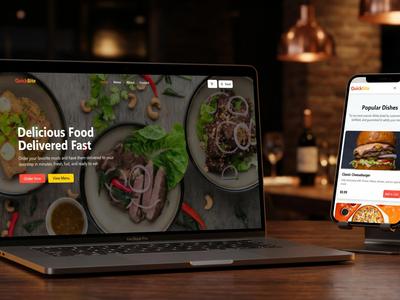
How to Build a Restaurant Website That Takes Online Orders (2026Guide)
Learn how to build a restaurant website that takes real onlineorders in 2026. From must-have features to tech stack, design tips, and a real case study —practical guide by Bravix Creative.

Landing Page Mistakes in 2026: The Critical Errors That Kill Conversions and SEO Traffic
Discover the biggest landing page mistakes in 2026 and learn how to improve SEO, user experience, and conversions with modern strategies.